Discord | Checkpoint
As Creative Director at The Heist, I led the Checkpoint social media campaign rollout; a retro-futuristic design daydream brought to life in collaboration with Discord.
It was a true joy to craft a visual world that felt nostalgic yet forward-facing; blending digital optimism, bold motion, and an immersive graphic system designed to scale.
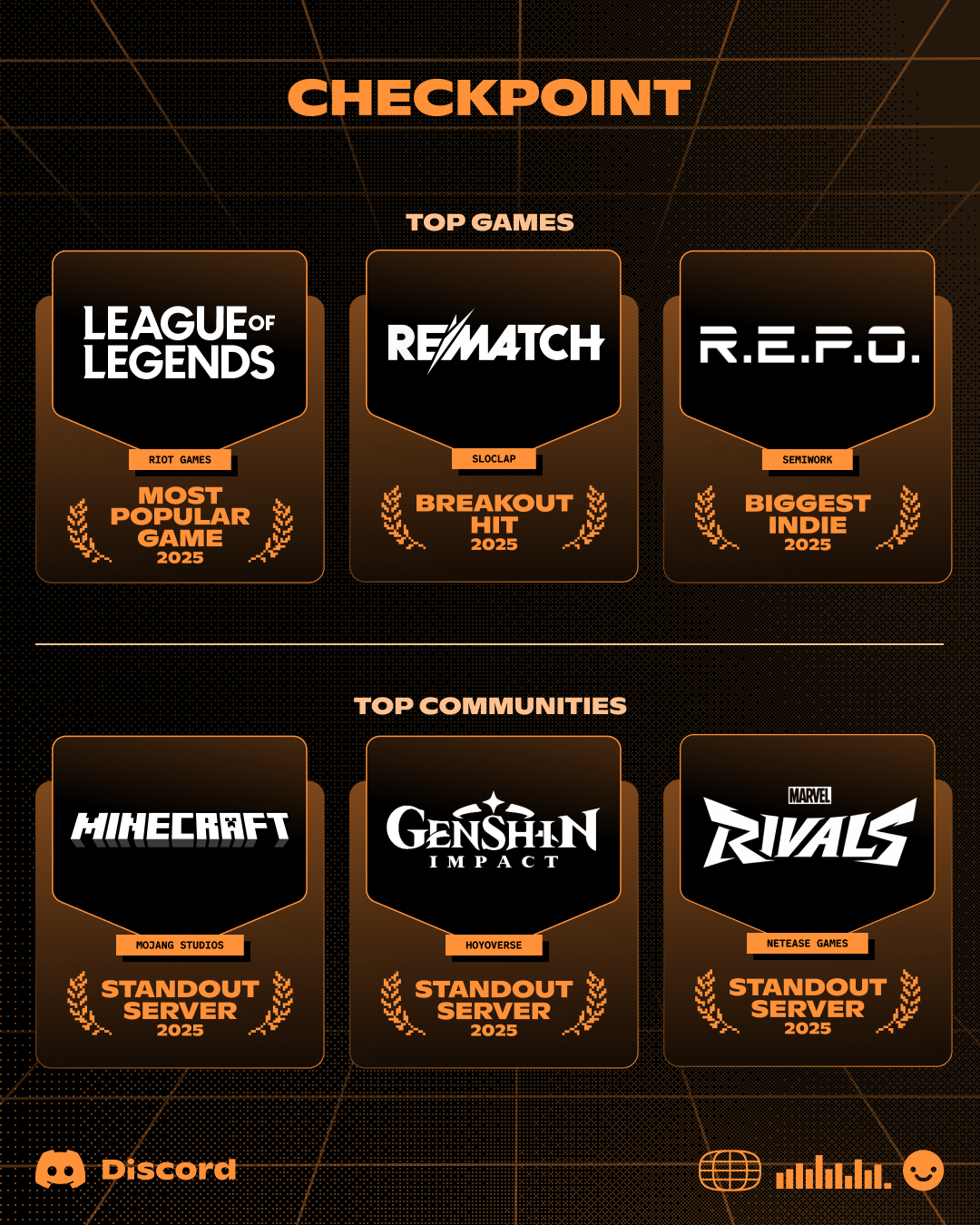
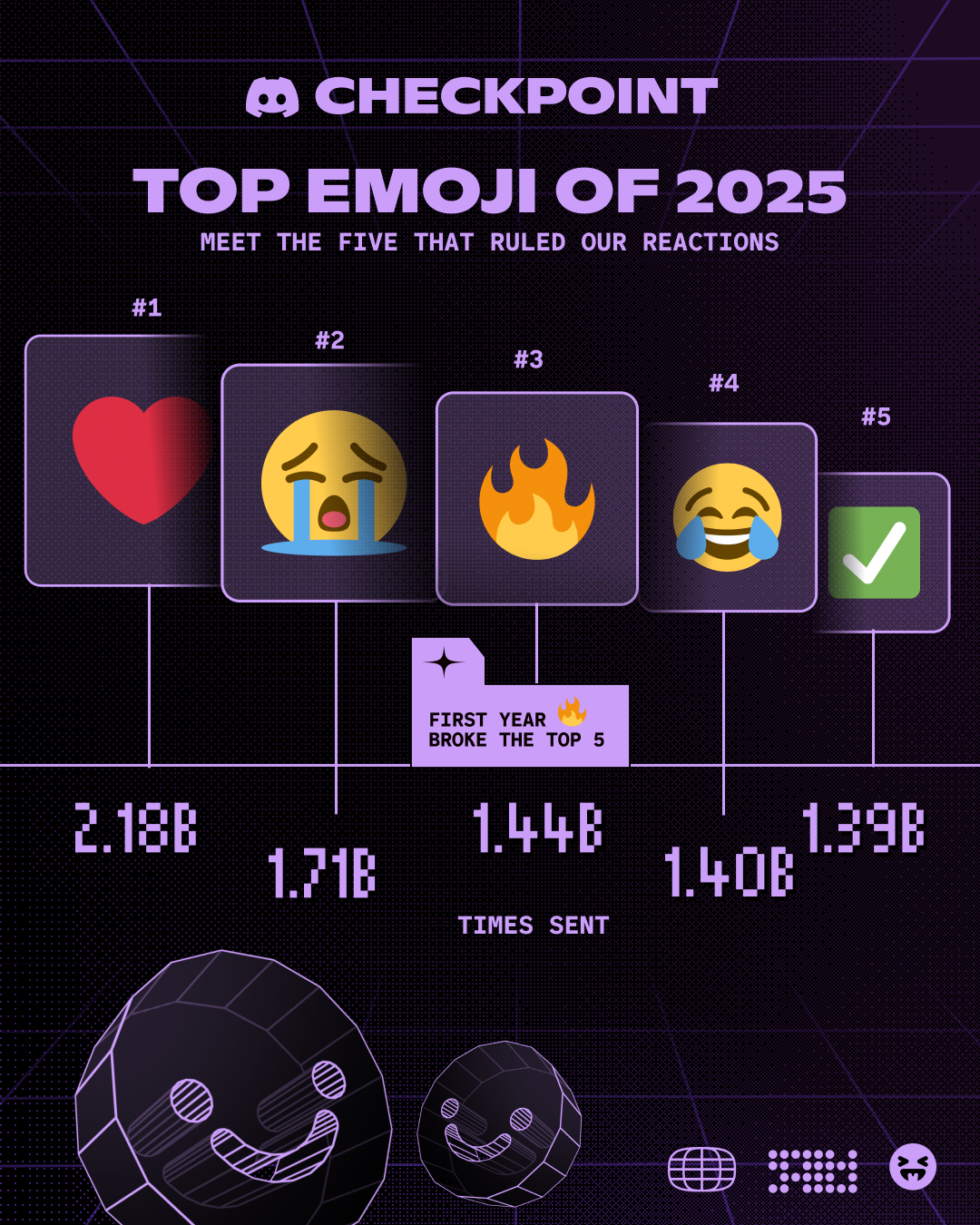
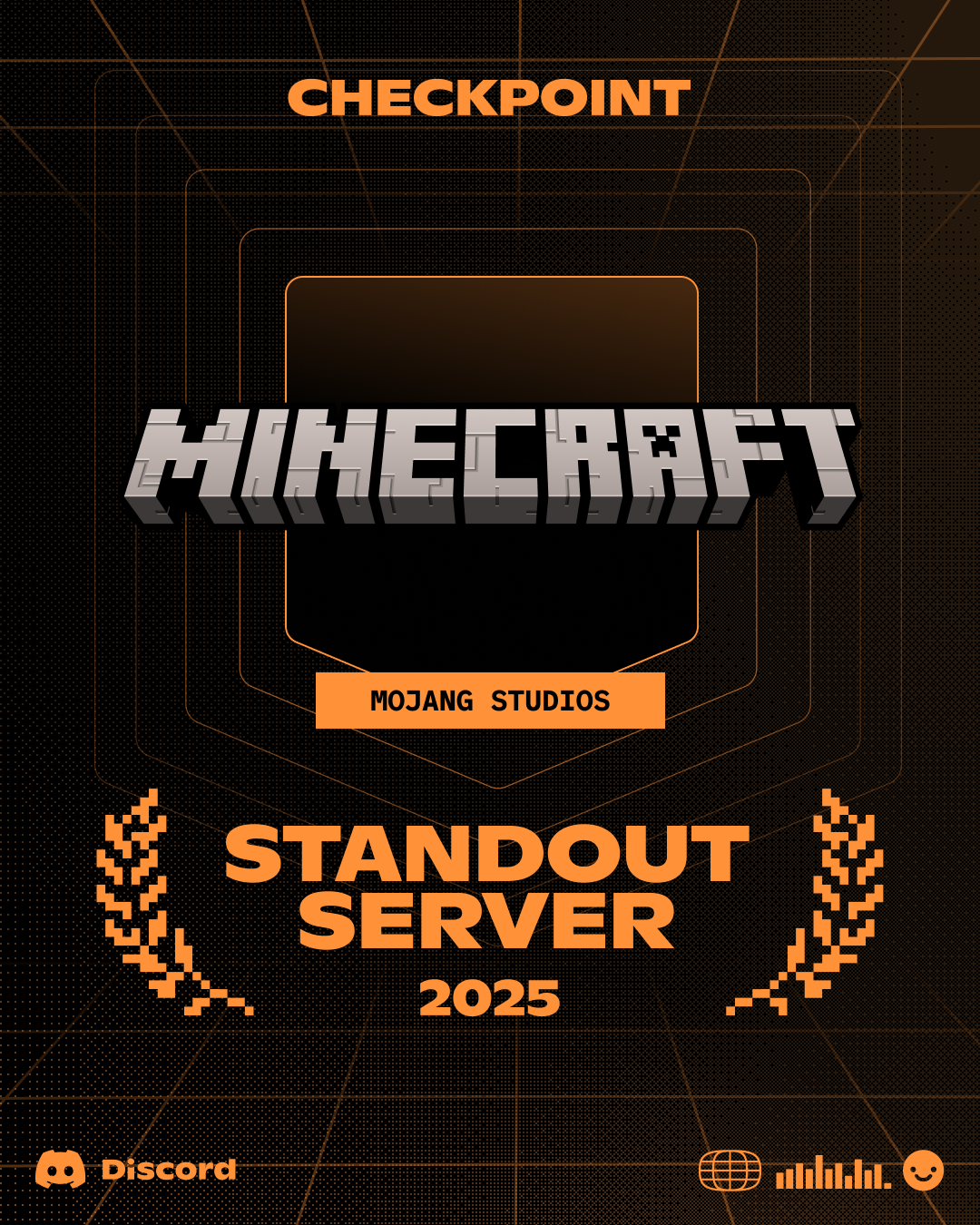
Beyond the hero campaign video, we built an expansive visual ecosystem: blog banners, infographics, partner award icons, partner mockups, and a full suite of influencer and game assets. We created graphics for 20 influencers and 6 games, designed to loop seamlessly across three aspect ratios.
In total, the rollout surpassed 100 deliverables; a cohesive, scalable creative system engineered to live fluidly across social, editorial, and partner touchpoints.


THE PROCESS
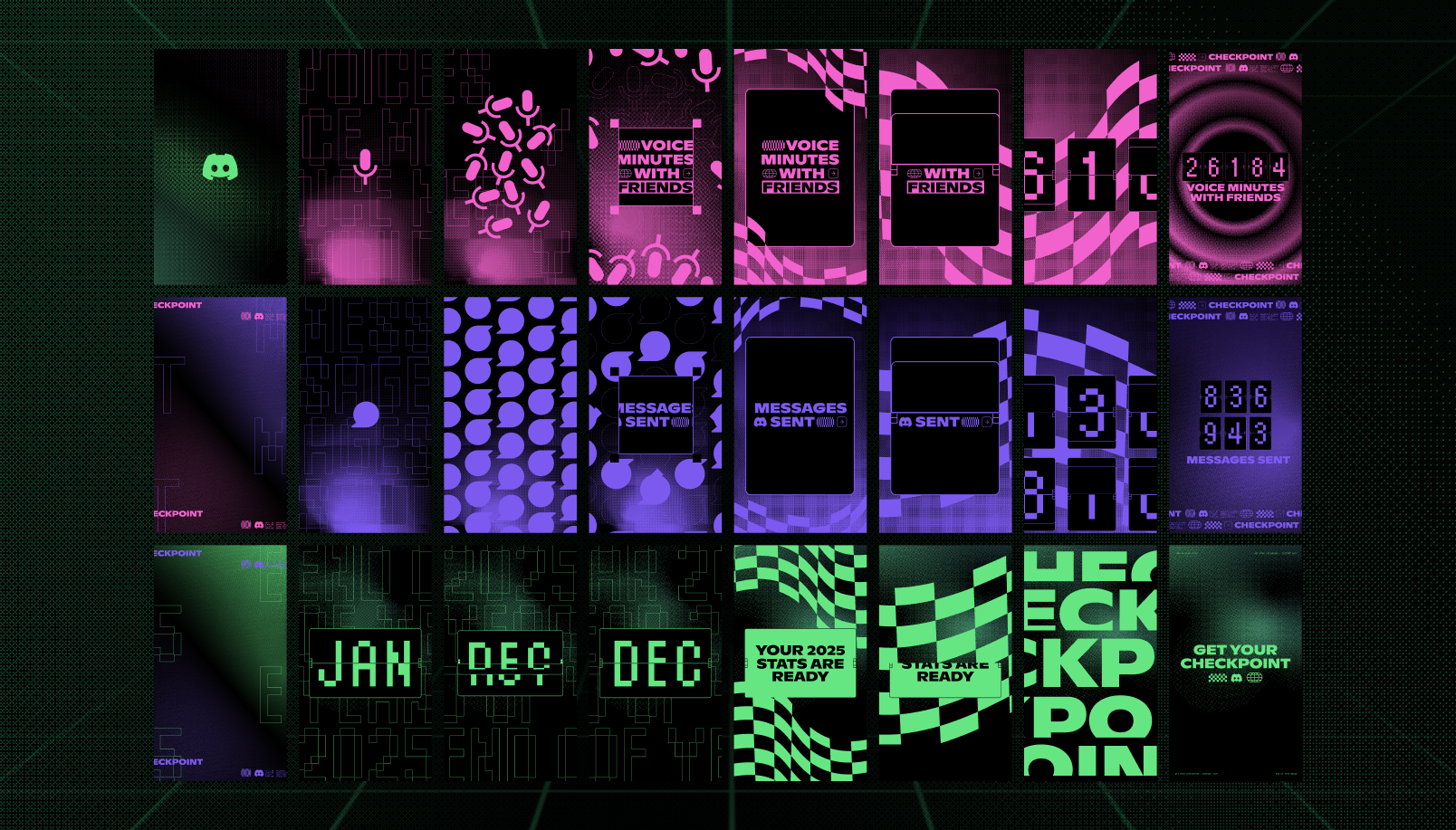
From the start, we knew the ticker motif had to be the backbone of the system. The Discord team already had the messaging and early look development figured out, so our job was really about bringing it all together in a way that felt cohesive.
It didn’t fully click until we saw how everything would live in the final execution. Once we did, the direction became clear. We leaned harder into the retro-futurist energy - in the graphics and in the sound - but always checked ourselves to make sure it still felt like Discord.
The main goal was simple: get attention. This was a social campaign! We had to stop the scroll. If it didn’t grab you in the first second, it wasn’t doing its job. So we leaned into bold graphics and strong color. No subtlety.
Direction 1 pushed the energy all the way up. Bold geometric forms, vivid color blocks, chunky icons, high-impact type. It felt loud, intentional, and constantly moving.
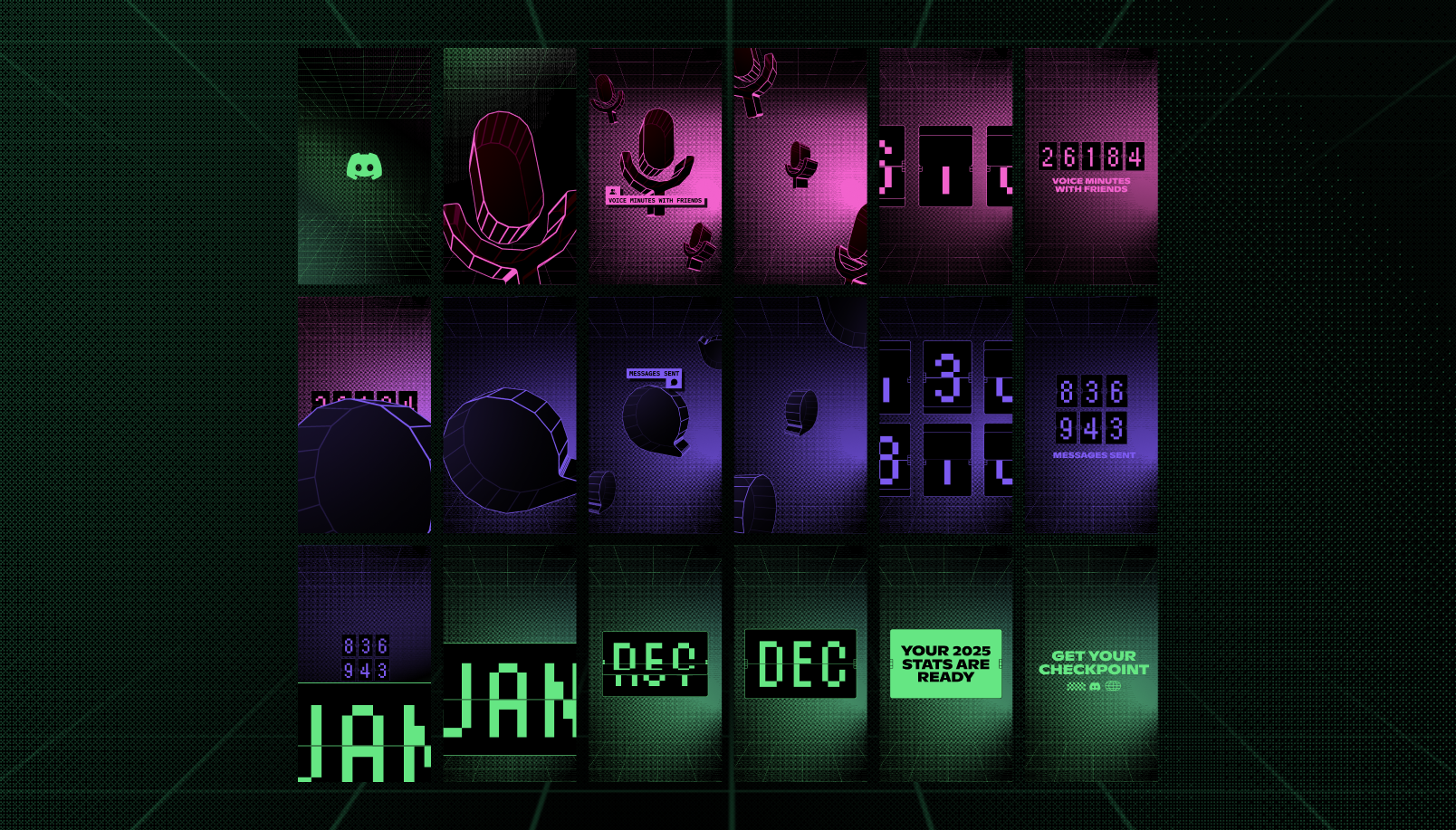
Direction 2 came straight from the Checkpoint product aesthetic. Wireframes, 3D icons, dimensional type moving through space; layering and parallax to create depth. It felt sleeker and more rooted in the product itself.
Together, they gave Discord a real choice: an expressive, graphic-forward world or a more refined, futuristic system grounded in the product.
What really sold it, though, were the motion tests. Once we added sound design, everything clicked. Those small tests brought the vision to life.